
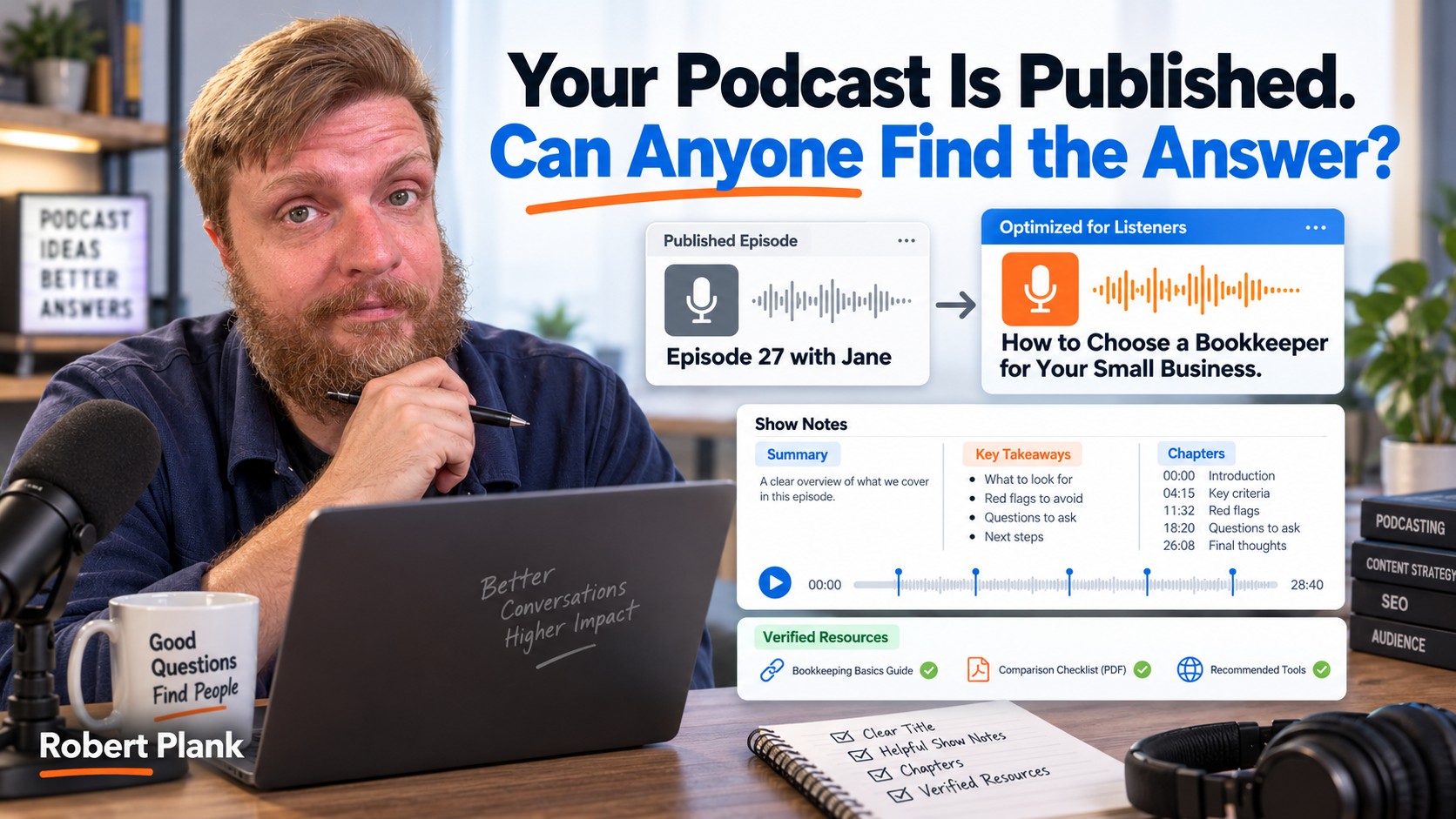
Podcast SEO Titles and Show Notes That Explain the Answer
You record a useful conversation about hiring a bookkeeper, then publish it as "Episode 27 with Jane." In this hypothetical example, the guest explains when to get help, which records to prepare, and what to ask about the monthly service. The title tells a stranger none of that.
A business owner staring at a pile of receipts needs to recognize an answer before pressing play. The title and notes give them that chance. A guest's biography and a few general sentences about an inspiring conversation usually don't.
I want a title that describes a substantial answer, a summary that explains the relevance, and notes that help someone find the right section or resource. A transcript and AI tools can help prepare them. Someone still needs to compare the finished package with the recording.
Find the Question the Recording Actually Answers
Start with the finished conversation. What would a listener know how to judge or do after hearing it? The strongest answer may come from a follow-up question rather than the subject you originally planned.
Our fictional bookkeeping interview could support several directions. Maybe the guest explained warning signs that an owner needs help. Maybe they compared service packages. Maybe the useful part was deciding which software to use. Those aren't interchangeable promises.
| Possible title | What the recording needs to explain | Why it matters |
|---|---|---|
| When Should a Small Business Hire a Bookkeeper? | Signs that help is needed and how to assess the owner's situation. | A listener wants to make the timing decision. |
| How to Choose a Bookkeeper for Your Small Business | Selection criteria, responsibilities, and questions about the service. | The listener expects help comparing candidates. |
| How to Choose Bookkeeping Software | A meaningful explanation of software choices and relevant differences. | A passing mention of software isn't enough. |
A guest's background may be part of why people listen. Include it when it helps, but don't make an unfamiliar name carry the whole explanation. Episode numbers can help you organize the archive without replacing the subject.
Use the language customers use. They're more likely to ask when to hire help than how to improve their financial infrastructure. Look at the questions in sales calls, email, and support conversations, then see which ones your recording answers.
In my video on podcasting for attorneys, I discuss starting with questions prospective clients ask before they're ready to call. The same habit helps you recognize the most useful part of an interview, whether the guest is an attorney, consultant, or bookkeeper.
Google's title guidance also favors descriptive, concise wording and discourages repeated keywords. That supports a useful editorial habit, not a ranking guarantee. I'd rather identify one substantial answer than promise five things the guest barely discussed.
A good title makes a promise the recording can keep.
Build the Title and Notes From the Finished Interview
- 1. Find the listener's questionIdentify a substantial answer in the recording.
- 2. Choose the titleState what that answer helps someone understand.
- 3. Draft the notesWrite a summary, specific takeaways, chapters, and resources.
- 4. Verify the detailsCheck timing, names, meaning, and actual destinations.
- 5. Approve the packageSave the reviewed version with the episode.
Use the Summary to Help Someone Decide
The opening of the description should explain who the episode helps, which question it answers, and what the guest contributes. Relevant experience belongs there. Three paragraphs celebrating the guest before naming the subject usually don't.
For the fictional interview, a sample summary could read: "A small-business bookkeeper explains when it might make sense to hire help, which records to prepare, and what to ask about monthly services. The conversation also covers which responsibilities remain with the owner."
That tells a reader what to expect. It doesn't require invented credentials or an assurance that the interview contains everything anyone will ever need to know about bookkeeping.
Follow the summary with a few specific takeaways. "Learn about bookkeeping" doesn't describe much. "Understand which records a bookkeeper needs before taking over monthly reconciliations" identifies a usable subject. Select the points that earned attention in the conversation.
Watch for a small remark growing into a much larger promise. If the guest briefly says owners should review financial reports, that doesn't support "The Seven Financial Reports Every Entrepreneur Must Review Weekly." The number, audience, and frequency may all be inventions.
Preserve disagreements and limits, too. If one guest favors handling the work with software and another recommends hiring sooner, the notes shouldn't pretend everyone agreed. The goal is to explain the conversation you recorded.
A reviewed transcript can sit alongside the notes for someone who wants the fuller exchange. It does a different job. Interruptions, repeated thoughts, and long detours can remain understandable in a recording while making a poor episode description.
Create Chapter Times After the Edit
Someone clicks "Questions to Ask Before Hiring a Bookkeeper" and lands in a discussion about software. Maybe the editor removed three minutes from the opening, but the timestamps still came from the raw recording.
Create the chapter labels once the edit is settled. Navigate to each time in the finished version and check where the subject begins. "Preparing Records for the First Meeting" is more useful than "More Great Advice."
For channels with chapter access, YouTube's manual chapter instructions require a first timestamp of 00:00, at least three timestamps in ascending order, and chapters at least ten seconds long. Use actual times from the finished video.
Audio and video may have different edits, so check both versions. Other hosts and players can handle chapter information differently. The immediate benefit is helping a person reach the answer, rather than promising that timestamps will produce better rankings.
Check the Destination Behind Every Link
A working link isn't necessarily the correct link. It can load perfectly and still lead to the wrong book, a similarly named company, or a checklist the guest never recommended.
If our fictional guest mentions a preparation checklist, find the guest's actual resource and confirm the destination. If you can't identify it, ask. Don't select a plausible replacement and describe it as their recommendation.
Check names, company details, book titles, and product versions against the source. Use descriptive link text so readers know what they're opening. Choose the resources that help someone use the conversation, rather than copying every social account and unrelated website from a biography.
If the destination is a paid service or a booking page, describe it that way. Someone should be able to tell whether you're sending them to a resource or inviting them to contact the guest about work.
Give AI a Drafting Job and a Person the Approval
In my real-estate podcasting video, I discuss organizing expertise into useful material. A transcript gives you the questions and explanations you've already captured. A tool can help organize those into title options, summaries, and notes.
Supply a transcript that matches the recording, the intended audience, and verified guest details. Ask for the strongest listener question, several supported title options, a concise summary, concrete takeaways, chapter subjects, and a list of resources mentioned.
Ask the tool to flag uncertainty instead of filling it in. An unclear company name needs review. A vague reference to a report doesn't give the tool permission to pick one. Preserve source timecodes for locating passages, then verify the chapter times against the final edit.
A reviewer checks that the summary represents the conversation, the takeaways don't exaggerate it, and statements belong to the right speaker. Give that person the recording and any correction or removal instructions. Otherwise they may write notes for a passage that won't appear in the release.
Save one approved package with the episode: title, summary, takeaways, chapter times, resources, and reviewer. The podcast editing handoff checklist helps keep those inputs and decisions together.
Approve the Next Episode From the Listener's Side
Open the finished recording beside the title and description. Can a stranger recognize the main question? Do the takeaways describe real answers? Do the chapters reach the right discussion and the links reach the promised resources? That's a useful final approval test.
You don't need to rewrite the entire archive this weekend. Start with the next episode, establish the reviewed package, and reuse that process. The amount of detail can vary with the conversation without abandoning the standard.
If coordinating those checks is what keeps the next episode waiting, visit DFY Podcast's production page. Bring your current recording-to-publication process so we can discuss the editing, reviewed titles, show notes, and publishing work you want handled.