
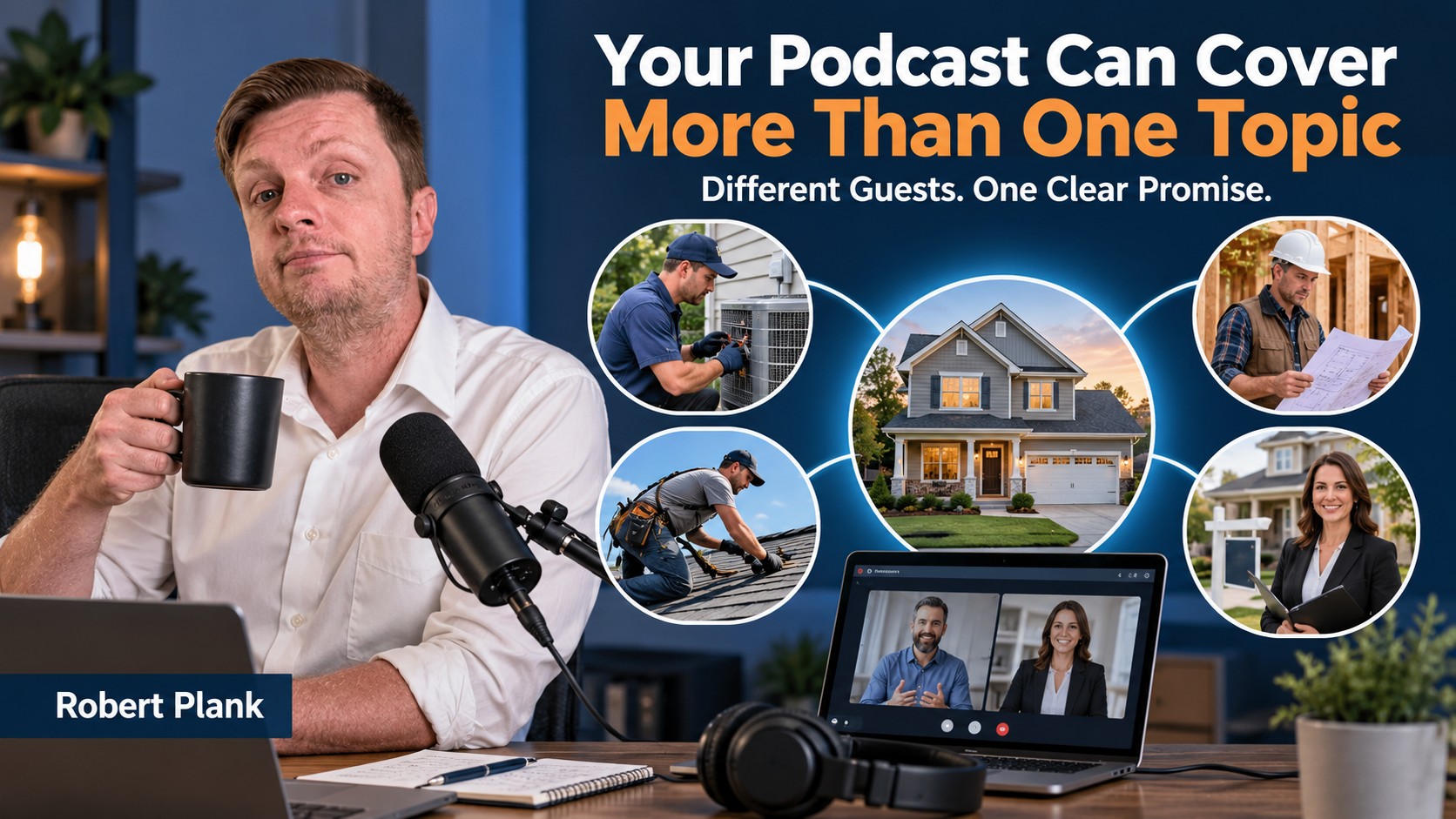
A Podcast Can Cover Several Topics: If It Makes One Clear Promise
William Shatner explained the idea behind Brown Bag Wine Tasting in a 2015 Vanity Fair interview: wine gave him an introduction to conversations with different people. The starting point was recognizable even when the guest and discussion changed.
You don't need wine or a celebrity format to use the underlying idea. A show can contain different subjects while offering the listener a familiar reason to return. The difficulty is deciding what that reason is before every interesting person becomes a potential episode.
For a business podcast, I'd write one clear promise and test the next conversations against it. Broadening the subject should help you serve the audience, not remove the need to choose.
Start with the listener's situation
Consider a hypothetical HVAC company owner who knows how to explain filters, thermostats, and seasonal maintenance. Those subjects could support a good technical show. But the owner also wants conversations with roofers, builders, and other local professionals.
The question isn't whether HVAC provides enough episode ideas. It's which person the show should help and what they should get from listening. A homeowner maintaining a first house has different concerns from someone building a custom home or managing rental properties.
For that first homeowner, air conditioning is one part of a larger job: making decisions about a property without becoming an expert in every trade. A roofer or contractor can contribute to that job while the host remains an HVAC professional.
The alternative is also valid. If your audience specifically needs detailed equipment explanations and you enjoy teaching them, a focused technical show may fit better. You don't have to broaden a useful show simply because more subjects are available.
Spotify's audience guidance offers a useful prompt to understand whom you're serving. It doesn't prove that broad shows outperform narrow ones. You still have to make the editorial choice for your own audience and purpose.
- 1. Name the listenerDescribe the situation and decisions this person faces.
- 2. Write one promiseSay what different conversations should consistently help them understand.
- 3. Test episode fitKeep a fitting idea, sharpen a relevant angle, or save an unrelated topic elsewhere.
- 4. Check recognitionAsk a few intended listeners what the promise and sample episodes suggest.
Write the promise in ordinary language
Try this working sentence: "This show helps this person understand this situation so they can take this useful next step." Replace the general terms with something recognizable.
For the hypothetical homeowner show, you might use: "Conversations with people who help homeowners plan, maintain, and improve the place they live." That makes room for different trades while giving you a boundary.
You aren't promising to teach everything a licensed contractor knows in one episode. You may help a person understand a choice, recognize a mistake, or prepare questions before hiring someone. A realistic promise helps you choose both the subject and how much to cover.
An accountant could use the same method for owners hiring their first employees. Payroll, pricing, cash flow, and delegation are different subjects, but they connect to the decisions those owners are facing. "Business" by itself wouldn't establish that connection.
Before you book a guest, finish another sentence: "This belongs because it helps our listener understand..." If the only answer is that the person is successful or entertaining, the angle isn't ready.
Make the fit decision visible
Here is how I would test the homeowner promise. These are proposed editorial examples, not claims about interviews we've recorded or technical recommendations for a house.
| Proposed conversation | Decision | Why |
|---|---|---|
| Roofer explaining repair versus replacement questions | Keep | Helps the same homeowner understand a property decision |
| Contractor explaining what to prepare before requesting an estimate | Keep | Connects the guest's expertise to planning work |
| Real estate agent discussing maintenance issues buyers notice | Keep | Adds another perspective on caring for the property |
| A capable guest with a vague topic called "Success" | Sharpen | The person may fit, but the listener's useful question is missing |
| Restaurant owner discussing menu pricing and staffing | Save elsewhere | Interesting subject, but it doesn't serve this show's homeowner promise |
Keep, sharpen, or save elsewhere. Those three decisions are enough. You don't need a complicated score that makes an unrelated guest look acceptable after enough points for personality.
Sharpening should uncover a genuine connection, not manufacture one. If a guest has relevant experience, choose a question they can actually explain. If the only way to make the episode fit is to stretch every word of the promise, let that conversation happen in another setting.
This is also how a broader show protects the audience. Someone who came for a roof discussion can understand why a renovation estimate is next. They don't need every episode, but they should recognize the reason the subjects share a feed.
Keep your approach recognizable without repeating a script
Your questions can help connect different professions. For the homeowner show, you might ask, "What decision do people get wrong before they hire someone like you?" A roofer, contractor, and agent could give genuinely different answers.
That question leaves room for experience. Ask what happened, why someone misunderstood the decision, and what information would have helped. Don't make every guest deliver the same five tips in the same order.
When I interview people on Marketer of the Day, I'm interested in how they attract attention, explain their work, persist, and respond when something doesn't go as planned. Different businesses reveal different parts of those problems. The questions connect the experiences without pretending the businesses are identical.
The William Shatner interview shows one optional recurring device. Your version can be much simpler: a reconsidered decision, a common customer question, or an assumption the guest stopped making. The device should open the conversation rather than become another performance everyone has to complete.
Choose a format you still want to record
I like twenty-minute interviews because they give me time to get past the biography and follow an interesting answer. That is a preference, not an ideal duration for every show.
A five-minute maintenance explanation could serve a homeowner well. A five-minute solo tutorial doesn't create the guest relationship you might want from a longer conversation with a local professional. Decide which experience you're trying to create before cutting the format down to the shortest possible recording.
Consider twenty conversations you'd genuinely enjoy having. A technical specialist may happily discuss equipment failures, difficult installations, and maintenance questions. A host who enjoys meeting different business owners may prefer the broader homeowner angle.
Either way, the audience promise and your own interest need to work together. An endless supply of possible topics isn't useful if you don't want to record them. Excitement about a new show won't finish the twentieth episode for you.
A broader subject still needs a reason to leave an interesting conversation out.
Test the next ten ideas before committing to them
Write ten possible episodes. Beside each, name the question or decision it helps the listener understand. Include an obvious fit, an idea that needs sharpening, and one you're willing to save for elsewhere.
Then show the promise and three sample episode ideas to two or three people who resemble the intended listener. Ask what they think the show helps with, which episode they'd choose, and whether anything seems out of place.
Listen before explaining what you meant. If they hear a show exclusively about selling houses when you intended broader home maintenance decisions, adjust the wording or examples. The exercise can expose confusion while the cost is a changed sentence, not ten completed episodes.
Spotify's naming guidance can help with choosing an understandable name that has room to evolve. Any working title still needs an availability check. A clever name won't fix a description that doesn't explain the show.
Apple Podcasts categories describe the content for its directory. They don't create a second editorial purpose or decide which guests belong. Make the promise first, then choose the publishing details that reflect it.
Related conversations and resources
Take the three fitting conversations into production
Finish with one written promise, three different conversations that fulfill it, and one interesting idea deliberately left out. That gives you an actual editorial decision rather than an open-ended list of people you'd enjoy meeting.
For the HVAC owner, the filter and thermostat explanations can stay. The roofer can belong too, because both help the same homeowner make sense of property decisions. There's no need to pretend every guest is discussing air conditioning.
Once the choices are clear, editing and publication need owners. If that's the part keeping your proposed show from becoming finished episodes, bring the promise and three conversation ideas to our podcast production page. At DFY Podcast, we'll discuss the recording-to-publishing work that supports a show you can explain and keep making.