
Make Better Podcast Introductions With a Double Opt-In
Give both people a specific reason to talk before you connect them. Use a relevant episode topic, two separate permission requests, and an introduction that explains itself.

Give both people a specific reason to talk before you connect them. Use a relevant episode topic, two separate permission requests, and an introduction that explains itself.

A good-sounding follow-up can still be the wrong message. Check sent mail, replies, and calendar evidence before asking AI to recommend your next action.
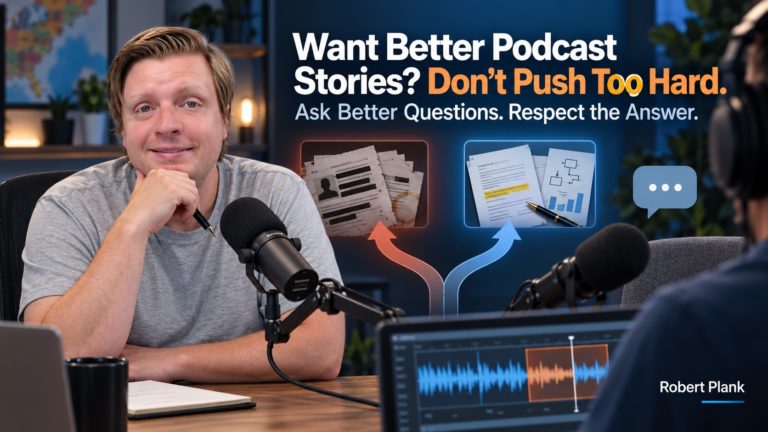
A useful story does not require every private detail. Ask for the decision, offer a real alternative, and give your editor clear instructions for preserving the guest’s meaning.
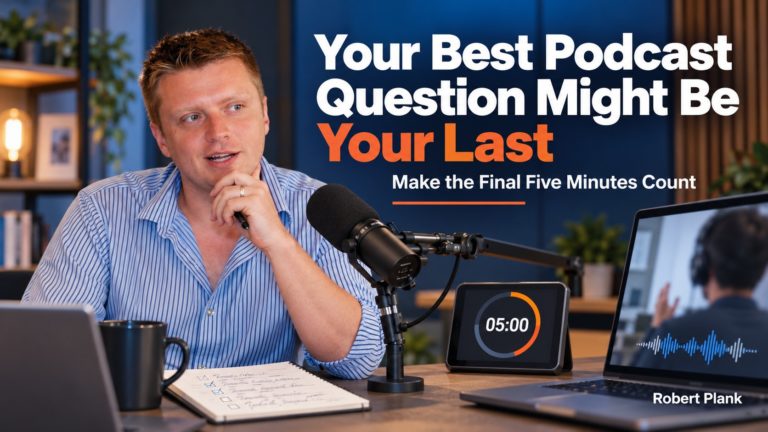
Finish the story, invite the question you missed, and give listeners one useful next step. A practical closing routine with examples from Mark Pattison and Anthony Trucks.
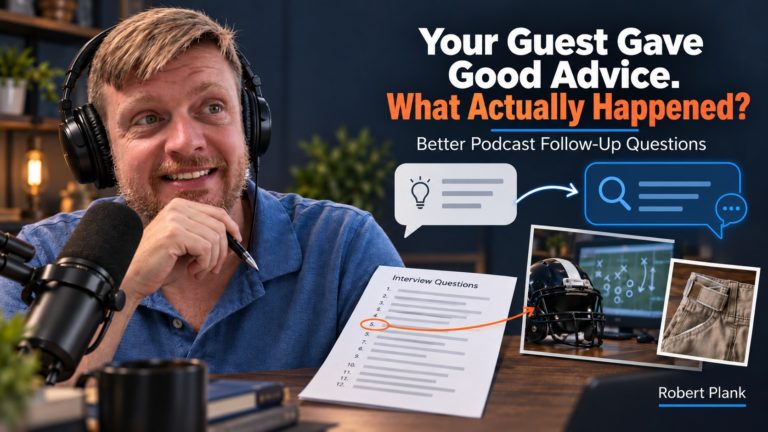
Move beyond general advice by asking for the experience behind it. Use one clear follow-up, check your assumptions, and keep the detail that makes the answer memorable.
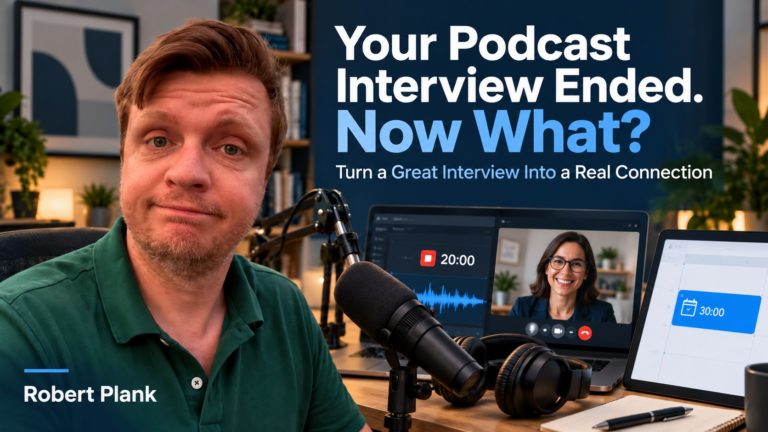
Close the recording clearly, ask what the guest is working on, and turn any useful next step into a promise you actually complete.
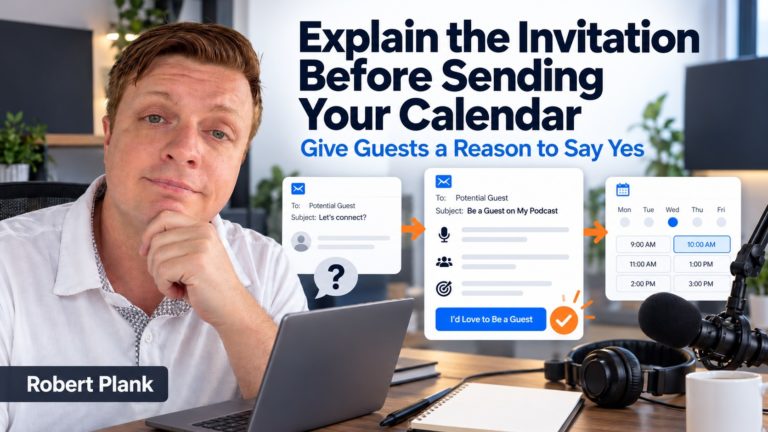
Explain why you chose the guest, what you’d discuss, and which appointment comes next. Then let the calendar handle the scheduling.

Broaden your podcast around a listener’s decisions, then test which guests belong, which need a sharper angle, and which should stay out.

Robert Ingalls reported listeners feeling better informed before contacting a law firm. Start with the recurring questions your own prospects need explained.
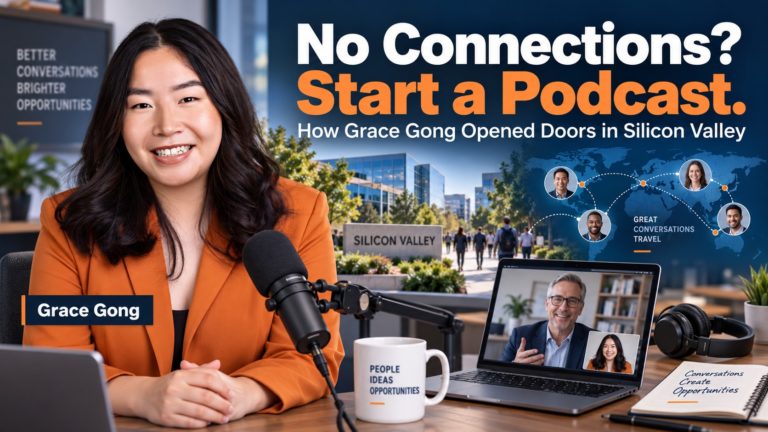
Grace Gong built interviews around the access her younger self lacked. Her approach offers a practical way to choose guests, listen, and serve a community.
Optional Analytics. Google Analytics helps us understand visits and production inquiries. Accept or decline. Privacy
Privacy ·