
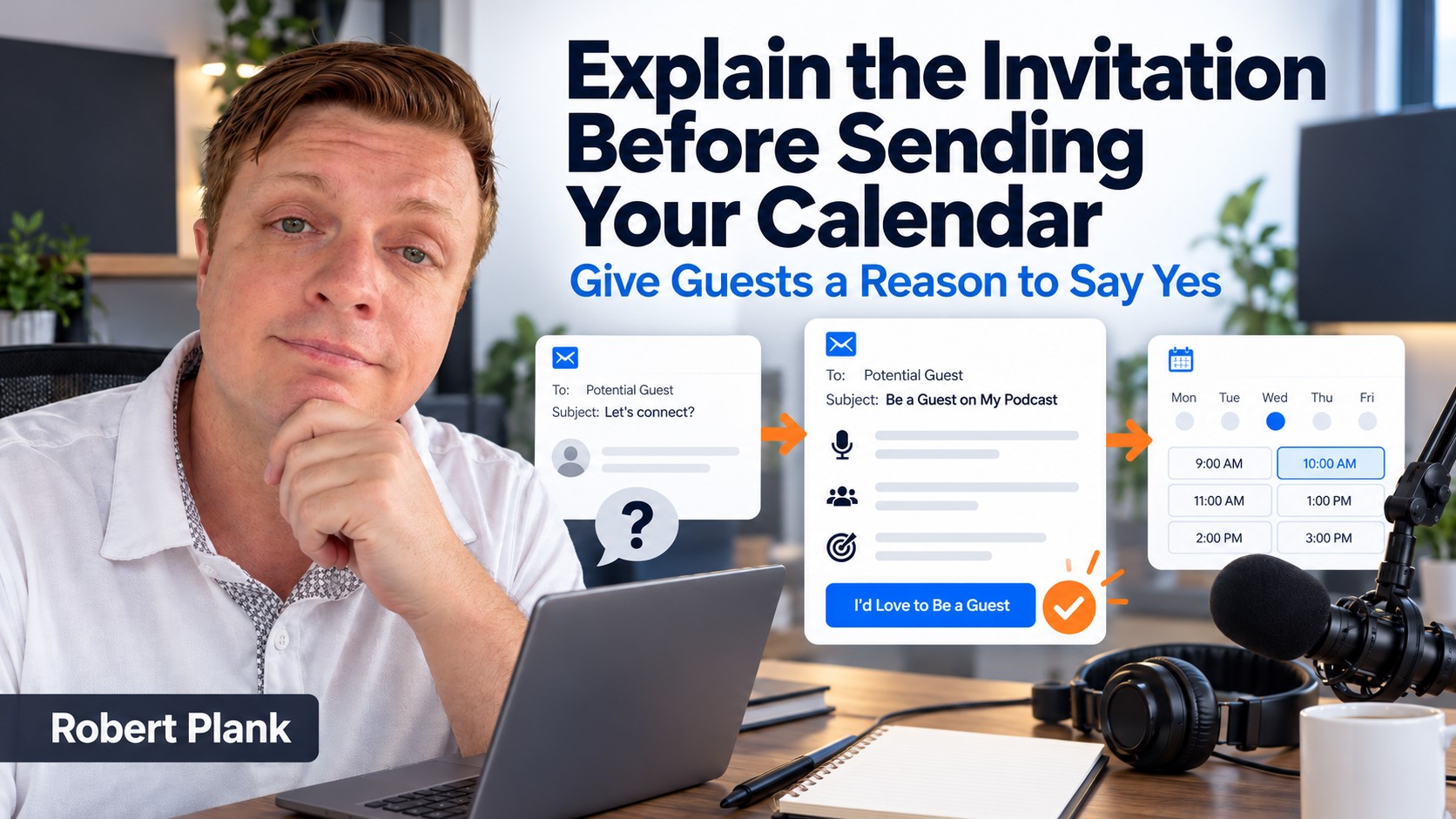
Explain the Podcast Invitation Before You Send Your Calendar
When I send a first hello on LinkedIn, I'm looking for a small response. I might ask which subjects the person is speaking about lately or mention something I actually noticed in their work. I'm trying to find a useful conversation before asking them to book time for it.
"I'd love to connect. Here's my calendar" skips that part. The recipient has to work out whether you're proposing an interview, a sales call, advice, or a partnership. Available times don't explain what they're agreeing to.
A calendar is useful after the purpose is clear. Your invitation still needs to explain why you chose this person, what you'd discuss, what the commitment involves, and what happens next.
Ask about interest before asking for availability
There's a difference between "Would this conversation interest you?" and "When can you do it?" My preference with someone who doesn't know me is to establish the first before sending the scheduling link.
That doesn't mean every first invitation must hide the calendar until a second message. If you fully explain the proposed conversation, the person may appreciate being able to schedule immediately. The difficulty is the unexplained appointment, not the presence of a link.
A short exchange can also improve the topic. You may have noticed an old recruiting biography while the person's current work concerns helping first-time managers. Ask, listen, and propose something that reflects what they actually do.
Their answer doesn't commit them to the recording. It gives you enough information to make a relevant invitation. If there isn't a fit, you can thank them rather than convert a casual reply into an appointment they never requested.
- 1. Establish interestStart with something real in their work and a small, relevant question.
- 2. Describe the episodeName the audience, subject, and reason you chose this guest.
- 3. Explain the commitmentDistinguish the topic call from the recording and state the actual format.
- 4. Match the booking pageSend the correct event link and confirm that its details agree.
Give the recipient an episode they can picture
Consider a hypothetical HR consultant who recently wrote about onboarding. You're creating an illustrative show called First Hire for owners becoming managers. A general invitation to discuss leadership and success makes the recipient invent the useful angle.
A more specific message could say: "I host First Hire for business owners becoming managers for the first time. Your article about onboarding caught my attention. Would you be interested in discussing why new managers avoid their first difficult employee conversation?"
First Hire is an invented show in this example. The wording demonstrates the useful parts: audience, relevant observation, proposed question, and a decision the guest can make. They can accept, suggest a different angle, ask for more information, or decline.
If the show is new, say so. You don't need to describe it as a leading podcast or imply an audience you haven't established. You can offer preparation, thoughtful attention, and the production work you actually provide without attaching an exaggerated reach claim.
Casey Cheshire discussed offering time and attention in our conversation about podcasting and customer connections. That's a useful way to approach a guest: offer a worthwhile exchange rather than assume they owe you an appearance.
Mention a published episode when it genuinely helps explain your format. A relevant example can answer a practical question. It shouldn't turn the invitation into a dozen links the person must inspect before understanding the request.
Say which meeting you're proposing
A short topic call and a recorded interview are different appointments. I use a pre-call to get acquainted, identify a useful angle, and decide whether a recording makes sense. That conversation isn't recorded for publication.
For the HR example, I could write: "The first meeting is a fifteen-minute, unrecorded topic call. If we both see a useful episode, we'll schedule the recording separately." Fifteen minutes is illustrative. Use the actual length and arrangement you provide.
If you book the recording directly, explain whether it includes video, how long to reserve, and where the finished conversation is intended to appear. A thirty-minute appointment with twenty recorded minutes is understandable when stated. An unexplained extra half-hour isn't.
The Oral History Association's preparation guidance comes from a different interview setting, but its principle of explaining purpose, process, and intended use is relevant. It doesn't establish a podcast booking formula. It helps illustrate what the participant needs to understand.
Keep a commercial discussion separate when that's a different purpose. Inviting someone to explain onboarding isn't permission to spend their topic call presenting production packages. If there's a reason to talk business afterward, name it and ask.
| What the guest sees | What it leaves unclear | More useful version |
|---|---|---|
| "Let's connect" | Subject and purpose | Explain the audience question and why you chose this person |
| "Book a call" | Pre-call, interview, or sales meeting | Name the specific appointment |
| Several unrelated event types | Which commitment the person should choose | Link to the agreed meeting type |
| An unfamiliar recording request after booking | Whether preparation or video is required | Explain the arrangement before asking for the appointment |
| A promised promotional package you don't provide | What will actually be delivered | State only the finished materials included in your process |
Make the event page match the invitation
Once the person is interested and understands the next meeting, let the calendar do its job. Send the link for that appointment rather than a menu containing consultations, interviews, and general networking calls.
Calendly's current link-sharing guidance explains sharing the page for a specific event type as well as a landing page containing several types. Choose the option that matches what you've already discussed. You don't need to make the guest choose the purpose again.
For our hypothetical topic call: "Great. Let's start with a fifteen-minute, unrecorded conversation about the angle. Choose a time for the podcast topic call here. If those times don't work, send a couple that do."
Use descriptive link text such as "Choose a time for our podcast topic call." Then open the page yourself. The title, duration, description, and confirmation should tell the same story. Don't invite someone to an unrecorded introduction and send a confirmation describing a recorded interview.
Nielsen Norman Group describes information scent as the clues helping people anticipate what a link leads to. Applied here, the practical test is simple: can the guest predict the appointment before clicking? That's an editorial application, not evidence of a particular booking-rate improvement.
Ask for preparation that fits the appointment
My form helps me understand the person's focus, audience, possible topic, and a real example we might explore. A sentence or two can be enough. I don't need them to tell the entire story before we record it.
A short bio and one relevant public destination help me prepare. Room to flag a subject to avoid can also prevent confusion. Carry information from your earlier exchange into your notes rather than make someone type the same topic again because a form has a blank field.
The form should fit the actual next meeting. An introductory call doesn't need every asset required for publication. A confirmed recording may need more precise information. Keep the requests proportional to what the guest has agreed to do.
If you ask whether they host a podcast or have a production need, that shouldn't secretly determine whether they're allowed to be interviewed. The audience question and guest fit should still be real.
Related conversations and resources
Test one invitation as if you were the stranger
Read the first three sentences of an invitation you're planning to send. Can you identify the show, the audience, why this particular person was chosen, and what you'd discuss? Then check whether the appointment type and duration are clear.
Ask someone unfamiliar with the show what they think they're agreeing to. If they expect a recorded interview when you intended an unrecorded topic call, you've found a small fix before it becomes a confusing appointment.
You can keep scheduling convenient without treating the link as the explanation. The work is done when the recipient understands the proposed conversation and can decide whether it belongs on their calendar.
If you're making those invitations but the interviews are accumulating after recording, bring one finished source file and your guest-delivery promise to our podcast production page. At DFY Podcast, we handle editing and publishing so you can follow through on the useful conversation you invited someone to have.