
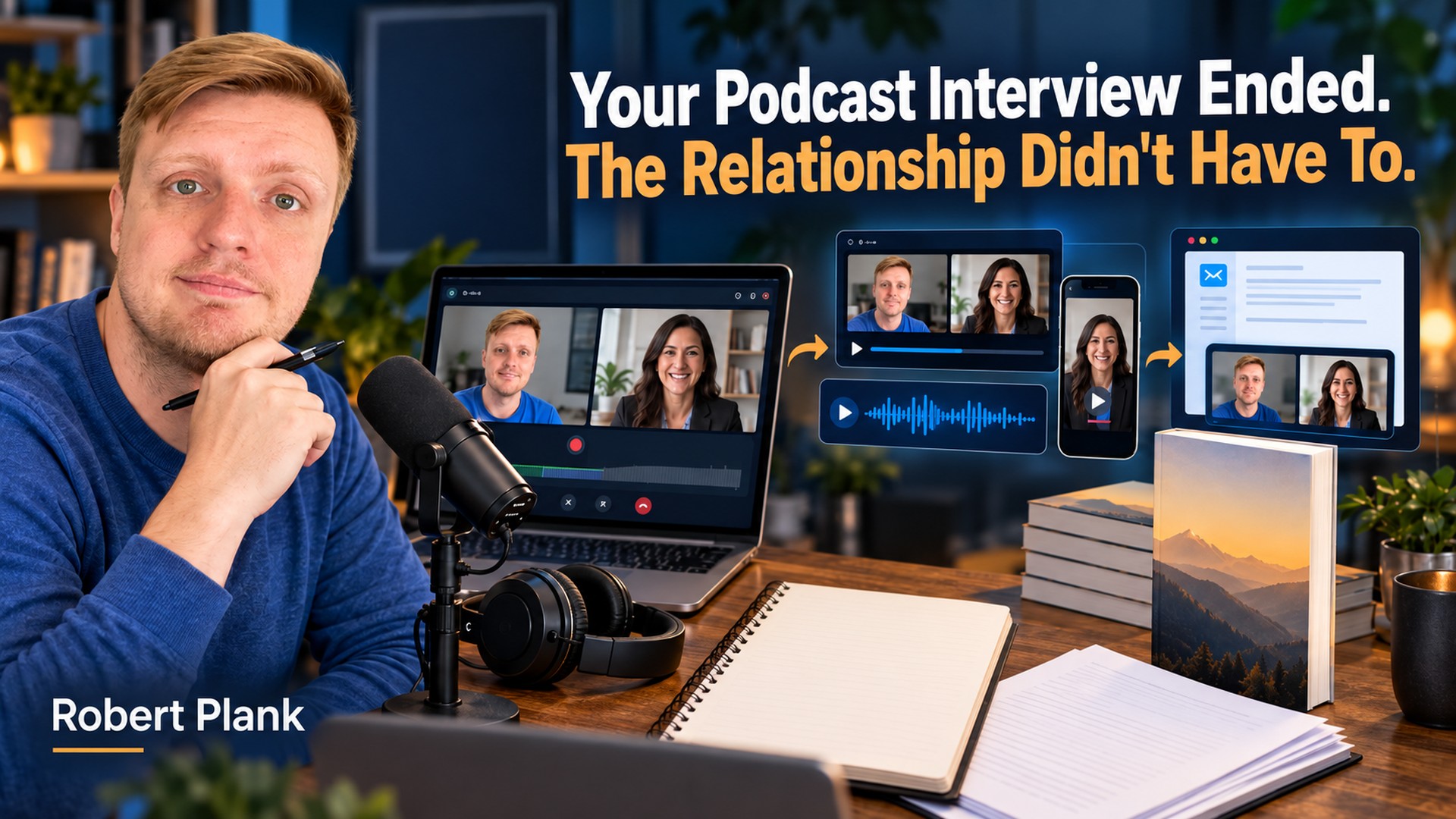
How I Turn Podcast Interviews Into Content, Books, and Business Relationships
I started recording Skype interviews with people I'd met at events because it gave me a reason to talk to them again. We'd already had an interesting conversation. Instead of letting their contact information disappear into my phone, I could invite them to explain their work to my audience.
The recording gave us something to publish, but it also gave us something to continue. I could send the guest the finished episode, follow up on a project they'd mentioned, or introduce them to someone who might be useful. Later, some of those interviews became material for a compilation book. The common thread was doing something with the conversation after we'd had it.
That's how I approach podcasting through Marketer of the Day and DFY Podcast. Choose someone worth talking to, find the experience behind their advice, and finish the work that makes the interview useful to someone else.
Start With Someone You Actually Want to Know
Jonathan Denwood and I first connected through an interview in 2020, and five years later we were still friends. I don't expect every guest to become a friend, client, or referral partner. I do want a better reason for inviting someone than an empty square on my publishing calendar.
You might admire something they've built, want to understand a problem they've solved, or serve similar customers. Start with customers, vendors, mentors, and people you've met through your work. Then look outside that circle for experiences your listeners would find useful. You don't need a famous guest to have a worthwhile conversation.
I've seen this from the guest's side, too. Years ago, I had a WordPress plugin called Paper Template. I appeared on 41 podcasts hosted by customers or affiliates connected to the product. They had an original conversation for their audiences, often alongside their affiliate links. I got to support people already involved in my business and talk with them beyond another product announcement.
Before recording, I use a short Zoom pre-call to narrow the subject. Three questions help: "Who do you help? What are you working on? What do people get wrong about it?" I'm looking for the part of their experience that gives us somewhere specific to go.
Imagine a leadership consultant who helps newly promoted managers delegate. That's a hypothetical example, but notice the difference between a broad interview on leadership and a conversation about a manager who keeps taking assignments back from employees. The second gives us a recognizable problem to explore.
Give the Conversation a Finished Path
- 1. Choose a personFind an experience your audience can learn from.
- 2. Record the decisionsAsk what happened, what changed, and why.
- 3. Publish useful materialFinish the episode and select excerpts that make sense.
- 4. Follow throughSend the work and keep the promises you made.
Find the Story Behind the Advice
After introducing a guest, I like asking, "What did I miss in that introduction?" A polished biography might be several years old. The answer can reveal a current project, a changed opinion, or the experience the guest actually wants to discuss.
Then I want to know what happened. What did they try? What went wrong? What changed afterward? Someone saying that managers should trust their teams isn't particularly useful until we understand what that trust looks like during an ordinary workday.
When I interviewed Kasim Aslam on Marketer of the Day, I asked what was exciting him in his business. We got into delegation and the difficulty entrepreneurs can have when other people take responsibility for work they've always controlled. That led me to ask about the mental hurdle involved in putting someone else in charge.
That follow-up came from his answer. I could have moved on to a standard question about hiring, but he had given us a more interesting direction. Prepare enough to understand the guest, then listen closely enough to change your next question.
I keep WWHW in the back of my mind: Why, What, How-To, What-If. Why should the listener care? What do they need to understand? How does the guest handle the problem? When might that advice fail or need adjusting? I don't announce those categories during the interview. They help me notice which part of the explanation we haven't reached.
With our hypothetical leadership consultant, I might ask what the manager did before taking a task back, whether the employee understood the desired result, and what the consultant recommended changing. If the guest has a real example, their answers determine the next question. I don't need to supply a successful ending for them.
Near the close, I'll ask what question I should have asked, where listeners can find the guest, and for a useful quote or lesson. That gives them a chance to add something my preparation missed. It also produces a better ending than cutting them off because we've reached the last question on a sheet.
Give Each Format a Different Job
A recording isn't a published episode yet. It still needs editing, a title, notes, links, and whatever promotional material you've agreed to produce. Record several enjoyable interviews without finishing those steps and you've created an editing queue.
I like deciding what we need before making every possible version. A full video, an audio episode, and a short excerpt serve different situations. Your audience's habits and the strength of the material should determine which ones deserve the work.
| Output | What it helps someone do | What to check |
|---|---|---|
| Full video | Watch the conversation and see the reactions. | The title, guest name, sound, picture, and relevant links. |
| Audio episode | Listen while driving, walking, or doing something else. | Whether visual references need a spoken explanation. |
| Episode page | Find the main ideas and resources without searching the recording. | Accurate notes and links to the actual resources mentioned. |
| Short clip | Understand one decision or example. | Enough context to preserve what the guest meant. |
| Book chapter | Follow a developed lesson in writing. | Editorial work, contributor arrangements, and a coherent place in the manuscript. |
A clipping tool can help find candidates, but somebody still needs to watch them. Does the excerpt make sense without the previous question? Did the captions spell the person's name correctly? Does the proposed title describe the answer, or promise something the guest never said?
Keep the complete episodes organized so someone who discovers an excerpt can find the full conversation. If you're starting with recorded video, my guide to turning a video interview into an audio podcast explains that part of the workflow. Finish the useful versions before inventing five more.
Follow Up With Something Specific
Once the episode is published, I can send the guest something we've made together. I might point out a clip where they explained an idea especially well or share the finished interview for their audience. They've invested time in this, too. Getting the material to them is part of completing the job.
The conversation also tells me what to remember. Is the guest writing a book, looking for speaking opportunities, or trying to reach a particular customer? If I later find something that fits, I have a reason to contact them that goes beyond a generic check-in.
When there's a good reason to keep talking, I may arrange a separate post-call conversation. One question I like is, "Who would be a useful introduction for you?" That tells me what the person actually wants rather than leaving me to guess. If I offer an introduction, I need to check that both people welcome it and then make it happen.
I recommend a simple follow-up record. Use a spreadsheet or a CRM you'll actually open, with these fields:
- The guest's name and published episode link.
- The project or priority they mentioned.
- Any introduction, resource, or other action you promised.
- The last contact date and the next action.
For the hypothetical leadership interview, the next action might be sending a clip about the manager's delegation mistake. If you also discussed a relevant introduction, check whether it would still help. The follow-up grows out of what you talked about.
Some guests will want to stay in touch and others will simply appreciate having done a good interview. Pay attention to that response. A shared recording gives you a reason to reconnect, but it doesn't create an obligation for the guest to join a sales conversation.
Turn an Interview Archive Into a Coherent Book
I've also developed a compilation book from previous podcast interviews. The recordings meant I already had conversations to evaluate and contributors I knew. The difficult part was turning spoken answers into chapters that worked together.
In my Marketer of the Day compilation-book case study, I described paying transcriptionists and editors to do that work. There was a grammar pass, the job of assembling the manuscript, and another editorial pass. An interview that sounds natural can read terribly when every interruption and unfinished sentence lands on the page.
That distinction matters before you promise yourself a book from a folder of transcripts. Look for a common subject across the interviews. Decide which contributions belong, which repeat another chapter, and what the reader should understand by the end. A collection of unrelated conversations still needs an organizing idea.
Agree on contributor permissions, review, editorial responsibilities, budget, and any fees before production. Permission to publish an interview isn't a substitute for agreeing how a new book project will work. You want those decisions settled while changes are still straightforward.
I prepared promotional copy for contributors around the Kindle launch, with later outreach for the paperback. The audiobook was part of the project, too. Each edition created another production job and another reason to communicate with the people involved. They needed useful material and clear instructions, not a vague request to promote something.
If your edited manuscript is ready for audio, Done For You Narration can help with audiobook production. Start with the manuscript you want people to hear, rather than asking a narrator to make a book out of unedited podcast transcripts.
Keep the Conversation Personal and the Production Clear
Choosing guests, listening, judging which ideas serve your audience, and following through on a promised introduction still need your attention.
You can delegate production, but you can't delegate caring about the person you interviewed.
The technical work needs a clear owner, too. Send the recording with the correct guest name, links, intended audience, publication target, and editing instructions. Name the person who reviews the finished material. My podcast editing handoff checklist gives you a practical way to organize those inputs.
For your next episode, choose one person you'd enjoy learning from and one problem your listeners would recognize. Decide what you'll publish and how you'll get it back to the guest. That's enough to turn another recording into a finished piece of work.
If editing, notes, clips, and uploads are stopping that follow-through, visit Done For You Podcasting's production page. Bring an existing episode or a proposed guest list so we can discuss the production work you'd like handled and the decisions you want to keep.